
Contents
- 1 Engineering Meets Efficiency in Modern Quail Egg Peeling Machines by KaiBa Machinery
- 1.1 KaiBa Machinery Factory: The Confluence of Design Innovation and Industrial Craftsmanship
- 1.2 The KaiBa Modern Quail Egg Peeler: Where Engineered Precision Drives Tangible Efficiency
- 1.3 The KaiBa Engineering and Production Process: A Blueprint for Reliability
- 1.4 The Engineering Advantage: Why KaiBa is the Rational Choice
- 1.5 10 Frequently Asked Questions (FAQs)
Engineering Meets Efficiency in Modern Quail Egg Peeling Machines by KaiBa Machinery
The culinary and nutritional revolution surrounding quail eggs is undeniable. Yet, for producers, this tiny delicacy harbors a massive industrial challenge: scaling a process fundamentally rooted in meticulous, manual dexterity. The quest for volume has long clashed with the imperative for unblemished quality and economic viability. This is where KaiBa Machinery Factory redefines the paradigm. We don’t just automate; we engineer. This article explores how KaiBa’s Modern Quail Egg Peeling Machines represent the perfect synthesis of advanced mechanical engineering and operational efficiency, transforming a delicate art into a scalable, precision science.
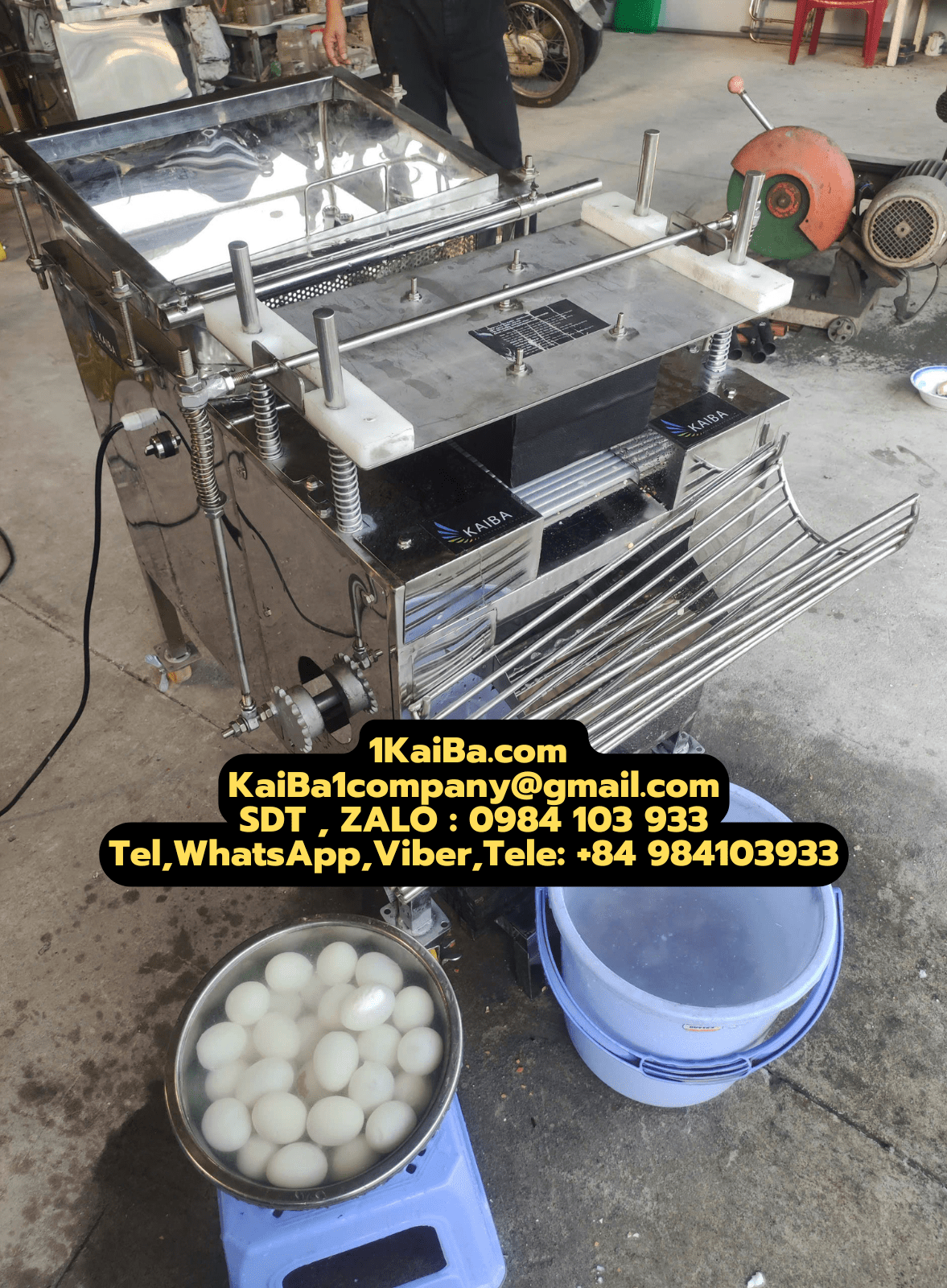
KaiBa Machinery Factory: The Confluence of Design Innovation and Industrial Craftsmanship
At the heart of KaiBa Company lies a core principle: complex food processing problems demand engineered solutions, not just mechanical ones. We are a specialized design and manufacturing hub where agricultural needs meet precision engineering. Our focus is deliberately narrow and deep, targeting products like quail eggs that are characterized by their fragility, high value, and labor-intensive processing.
Our foray into quail egg peeling was born from a simple, critical insight: existing automation often failed because it treated quail eggs as merely “small chicken eggs.” KaiBa’s engineers recognized that effective automation required a fundamental re-engineering of the peeling physics. We assembled a cross-disciplinary team combining mechanical design, fluid dynamics (for water-assisted peeling), and food process engineering. This team operates from our integrated facility, housing everything from CAD/CAM design studios and metallurgy labs to full-scale assembly lines. Every KaiBa machine starts as a computational model, is realized with CNC precision, and is validated through rigorous real-world testing. We are not equipment sellers; we are productivity partners, engineering efficiency directly into the stainless steel core of our machines.

The KaiBa Modern Quail Egg Peeler: Where Engineered Precision Drives Tangible Efficiency
The KaiBa Quail Egg Peeling Machine is a system where every component, from the feed hopper to the discharge belt, is purpose-engineered to convert input energy and raw material into maximum output with minimal waste. It is a tangible expression of efficiency through engineering.
-
Engineered Throughput with Mathematical Precision: We move beyond vague claims. Our standard model, the KaiBa-QEP Pro, is engineered to process a guaranteed 80-160 kg of quail eggs per hour. This translates to a deterministic output of 7,000 to 14,000 individually peeled eggs per hour, a throughput calibrated by gear ratios, motor RPM, and conveyor speed that can be precisely calculated and replicated, replacing guesswork with predictability.
-
Efficiency Quantified in Yield and Savings: Engineering optimizes resource use. Our patented Multi-Stage Differential Peeling System applies varying pressures at different points, mimicking the most effective manual technique but with perfect consistency. This engineered approach reduces breakage to under 1.5% and increases usable yield by 20-35% compared to manual lines. This direct yield increase, combined with an 80-90% reduction in direct labor costs, creates an efficiency multiplier that rapidly improves your cost-per-unit metric.
-
Consistency as an Engineered Output: Inconsistency is a form of inefficiency. KaiBa machines eliminate it. Through PLC-controlled servo adjustments and balanced mechanical systems, each egg experiences an identical process environment. This results in a flawless, uniform product batch after batch, reducing quality control overhead and enhancing brand value in premium markets.
-
Hygiene Engineered into the Structure: Efficiency is nullified by contamination or downtime for cleaning. Our machines are constructed with certified AISI 304 (1.4301) stainless steel, featuring radiused corners, polished welds, and quick-release panels. This design minimizes bacterial harborage and allows for a complete clean-down in under 25 minutes, maximizing uptime and ensuring compliance with global food safety protocols.
-
Energy and Utility Efficiency: True engineering considers total operational cost. The KaiBa system incorporates high-efficiency IE3-class motors and a closed-loop water filtration and recirculation option that can reduce water consumption by up to 70%. This holistic approach to efficiency lowers your utility overhead and environmental footprint.
-
Scalability Through Modular Engineering: Our machine architecture is modular by design. Capacity can be scaled by adding parallel processing modules. It can be seamlessly integrated with our recommended automatic boiling and cooling systems and vision-based grading sorters, allowing you to engineer a complete, efficient production line that grows with your business.
The KaiBa Engineering and Production Process: A Blueprint for Reliability
The reliability and efficiency of every KaiBa machine are not accidental; they are the inevitable result of a meticulously documented and controlled 10-stage engineering and production process.
Stage 1: Applied Research & Computational Design (4 Weeks)
Process begins with data. We measure shell fracture toughness, membrane adhesion strength under different thermal shocks, and egg geometry. This data informs Finite Element Analysis (FEA) in SolidWorks to simulate stresses on the egg white during peeling. We model fluid dynamics for the water spray system to optimize separation force. This computational phase ensures the design is fundamentally sound before metal is cut.
Stage 2: Specification and Sourcing of Tier-1 Components (Ongoing)
We specify components as an engineer would. Structural frames use 3-5mm thick, mill-certified 304 stainless. Drive systems feature Siemens or Yaskawa servo motors for precise motion control and Italian-made Marzocchi gear pumps for consistent water pressure. Every component has a documented pedigree and performance specification.
Stage 3: Precision Machining with Digital Twin Verification (5 Weeks)
Component fabrication occurs on Mazak 5-axis CNC machining centers. Critical parts like the peeling drum with its laser-cut perforation pattern and the custom-molded, FDA-grade silicone rollers are machined to tolerances of ±0.02mm. Each machined part is 3D-scanned and compared to its digital twin to ensure perfect conformance to the design intent.
Stage 4: Robotic Welding & Hygienic Fabrication (4 Weeks)
For structural integrity and cleanability, we employ fully robotic TIG welding arms programmed for optimal weld paths. This ensures every weld on a food-contact surface is continuous, smooth, and free of pits or crevices. Sub-assemblies are built on custom jigs that guarantee alignment and interchangeability.
Stage 5: Advanced Control Systems Integration (3 Weeks)
The machine’s “nervous system” is integrated in a dedicated clean room. The central PLC (e.g., Allen-Bradley CompactLogix) is programmed with ladder logic and structured text to manage not just sequencing, but also predictive alerts for maintenance. The 12-inch HMI touchscreen provides real-time OEE (Overall Equipment Effectiveness) data, including throughput, yield percentage, and efficiency metrics.

Stage 6: Systemic Calibration & Performance Validation (3 Weeks)
Every machine undergoes a signature validation protocol:
-
Factory Acceptance Test (FAT) Protocol: We execute a documented FAT, processing a minimum batch of 2,000 kg of client-provided or equivalent quail eggs.
-
Parameter Optimization: Engineers fine-tune the system: Vibration feeder frequency (40-60 Hz), roller gap pressure (0.5-1.0 bar), and turbulent water flow velocity (2-3 m/s) are adjusted to achieve the optimal point on the efficiency curve.
-
Performance Certification: The machine must consistently achieve >98% whole egg yield and a peeling completeness rate of >99.5% to receive its performance certificate before shipment.
Stage 7: Surface Finishing & Comprehensive Quality Gates (1 Week)
All exteriors undergo electropolishing for a smooth, easy-clean finish. The machine passes through seven quality gates, including a torque check on every bolt, an electrical safety test at 1500V, and a full operational cycle test. All data is logged in the machine’s digital birth certificate.
Stage 8: Packing for Global Logistics & On-Site Deployment (1 Week)
Using export-grade, ISPM 15-compliant timber, we build custom crates with engineered cushioning to protect the machine during sea or air freight. We provide detailed site preparation guidelines for foundation, power, and water hookups.
Stage 9: Virtual Commissioning & On-Site Empowerment
Leveraging the digital twin, we can perform virtual commissioning to troubleshoot potential issues before the machine arrives. Upon arrival, our support team guides installation via AR (Augmented Reality) overlays or on-site technician dispatch. We provide Level 1, 2, and 3 training for operators, technicians, and engineers.
Stage 10: Lifecycle Support & Continuous Improvement
Your machine is connected to our support ecosystem. We offer a 36-month extended warranty plan. Spare parts are mapped in an interactive digital catalog. Performance data can be shared (with consent) for our continuous improvement program, ensuring future iterations benefit from real-world operation.
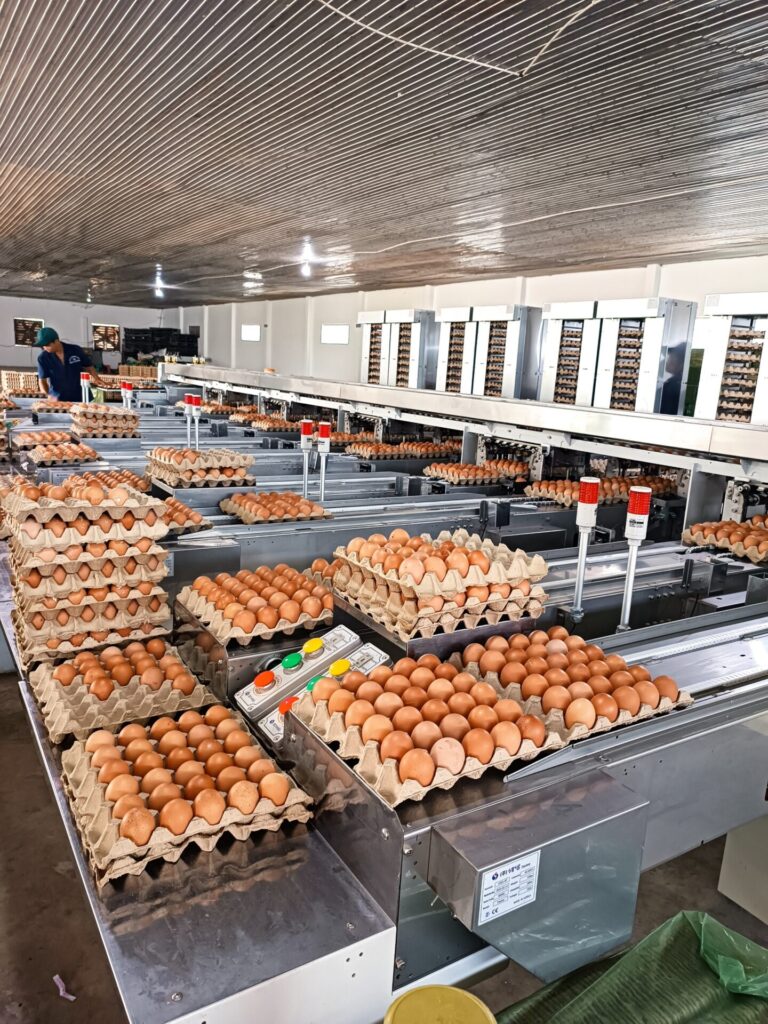
The Engineering Advantage: Why KaiBa is the Rational Choice
Selecting KaiBa is a decision based on technical merit and long-term value, not just price.
-
Depth of Engineering: We solve the “why” behind the “how.” Our solutions are based on first principles of physics and material science applied to the quail egg, resulting in inherently superior and more reliable performance.
-
Predictable Performance & Data-Driven Guarantees: We provide not just promises, but data-backed performance warranties. You know exactly the efficiency, yield, and throughput you are buying, eliminating operational risk.
-
Designed for Total Cost of Ownership (TCO): Our focus on energy efficiency, easy maintenance, durable components, and high yield is engineered to minimize your TCO over a 10-15 year lifespan, making the KaiBa machine the most economical choice over time.
-
In-House Control of Critical Processes: From welding to programming, we control all critical value-adding stages. This vertical integration ensures quality consistency, protects our intellectual property, and allows for true customization.
-
Global Compliance and Certification Support: Our machines are designed to meet CE, UL, or other relevant international standards. We provide the necessary technical documentation packs to simplify your own compliance and certification audits.
-
A Partnership with the Engineers: When you contact KaiBa, you communicate directly with the engineering and production team. This ensures accurate technical communication, rapid problem-solving, and a shared commitment to your machine’s success.
10 Frequently Asked Questions (FAQs)
Q1: What specific engineering features differentiate your machine for delicate quail eggs?
A: Three key features: 1) Iso-elastic Silicone Rollers that conform to egg shape without excess pressure. 2) A Laminar-to-Turbulent Water Transition Zone that gently lifts the membrane. 3) A Mass-Spring-Damper Isolated Frame that prevents vibration from damaging eggs, a critical design for their fragility.
Q2: Can your machine handle variations in egg size from different quail breeds?
A: Yes. The engineering solution is an auto-sensing roller gap system. A laser micrometer can be integrated to measure egg size on the infeed and automatically adjust the roller gap via the PLC and servo actuators, ensuring optimal pressure for each egg.
Q3: What is the expected energy consumption per kilogram of peeled eggs?
A: Based on our standard model at peak efficiency processing 100 kg/hr, the specific energy consumption is approximately 0.025 – 0.03 kWh per kilogram of peeled eggs. We provide detailed energy models in our technical proposals.
Q4: How does the machine’s design prevent cross-contamination between batches?
A: Engineering for hygiene includes: Sanitary quick-clamp fittings on all water lines, fully drainable surfaces with a minimum 3° slope, and sealed-for-life bearings on all shafts in the product zone. This allows for effective wet-sanitation between batches with different product codes.
Q5: What is the Mean Time Between Failures (MTBF) for critical components?
A: We design for reliability. Key components have the following engineered MTBF: Drive Motors: 50,000 hours; PLC System: 100,000 hours; Main Gearbox: 30,000 hours. Preventative maintenance schedules are designed around these figures.
Q6: Do you provide the engineering drawings for factory floor planning?
A: Absolutely. Upon order confirmation, we provide detailed 2D layout drawings (DWG format) and 3D models (STEP files) with all critical dimensions, utility inlets/outlets, weight loads, and clearance zones for seamless integration into your facility plan.
Q7: How is the machine’s efficiency impacted by the initial egg boiling process?
A: Efficiency is system-dependent. For optimal results, we recommend and can supply an engineered Multi-Stage Cooling Tunnel that ensures a precise and consistent thermal shock. Inconsistent boiling/cooling is the largest variable affecting peeling efficiency; our machinery brings this critical pre-step under control.
Q8: What kind of technical training do you provide for our maintenance engineers?
A: We offer a tiered training program: “Operator” (HMI use, cleaning), “Technician” (mechanical adjustment, part replacement), and “Engineer” (PLC diagnostics, system optimization). Training includes digital manuals, video libraries, and direct access to our engineering support portal.
Q9: What is your innovation pipeline? Are current machines upgradeable?
A: Our R&D is continuous. Current innovations in development include AI vision for pre-crack inspection and automated brine injection systems. Our modular design allows many future upgrades to be retrofitted to existing machines in the field.
Q10: How do you handle commissioning in a country with different electrical standards?
A: We engineer multi-voltage capability into our control panels from the start. We specify and supply the correct transformers, plugs, and protection devices for your local grid (e.g., 480V/60Hz for North America, 400V/50Hz for EU). Our electrical schematics are customized for your country’s standards.
Engineer Your Path to Unrivaled Efficiency. Choose Precision. Choose KaiBa.
Transition from artisanal limitation to engineered abundance. Let us provide the machine where every detail is calculated for your success.
Contact KaiBa Machinery to Request a Technical Dossier and Engineering Proposal.
KaiBa Company.
Phone & WhatsApp: +84 984103933 (Click to chat: http://wa.me/+84984103933)
Email: [email protected]
Explore Engineered Food Solutions:
-
Innovation Hub: http://1kaiba.com
-
Engineered Quail Egg Systems: https://quaileggmachine.com
-
Advanced Egg Processing: https://eggpeelmachine.com
-
Coconut Engineering: https://machinecoconut.com
-
Aloe Vera Bio-Processing: https://aloeveramachine.com

